Archive for category: 15-min. ideas

Must Pop Words – great game for literacy, typing skills

must pop words enterHere’s a smart, fun game that’s great for literacy and for improving typing skills.

In Must Pop Words, letters – inside bouncy balls – fall down and accumulate at the bottom of the page.

You have to type words using the letters. Every word you type erases those letters. If the letters pile up to the top of the page (which they will inevitably do) you lose.

Little tasks like, “create a word ending with e” or “create a six-letter word” let you earn extra points.

The balls bouncing around and the cute penguin who sticks his head in every once in awhile make this a signature Bart Bonte game – one of a series of elegant, fun games you can find on his website. (In my opinion, Bonte is the best casual game designer on the Internet.) Enjoy!

Play Must Pop Words here.

+Continue Reading

Fun, active (and profitable!) literacy game

Dollar_sign_(reflective_metallic); from Wikimedia CommonsMy niece told me about a game that her friend’s mom used to set up to get her kids more interested in reading.

She would scatter letters around the room. Each letter had a price on it.

“Easier” letters like E might be worth a penny or five cents, whereas “harder” letters like Q or Z might be worth a quarter.

(Are you seeing where this is going?)

The kids would run around the room, collecting the letters; they would then put them together into words or phrases.

Then they’d add up the “money” they’d earned and… cash them in, using their parents as the bankers.

My niece said the game succeeded in making her friend much more interested in words and in reading.

And, presumably, in banking.

Here’s another case in which a mom successfully bribed her daughter into reading.

+Continue Reading

Stuffed letters are great for literacy

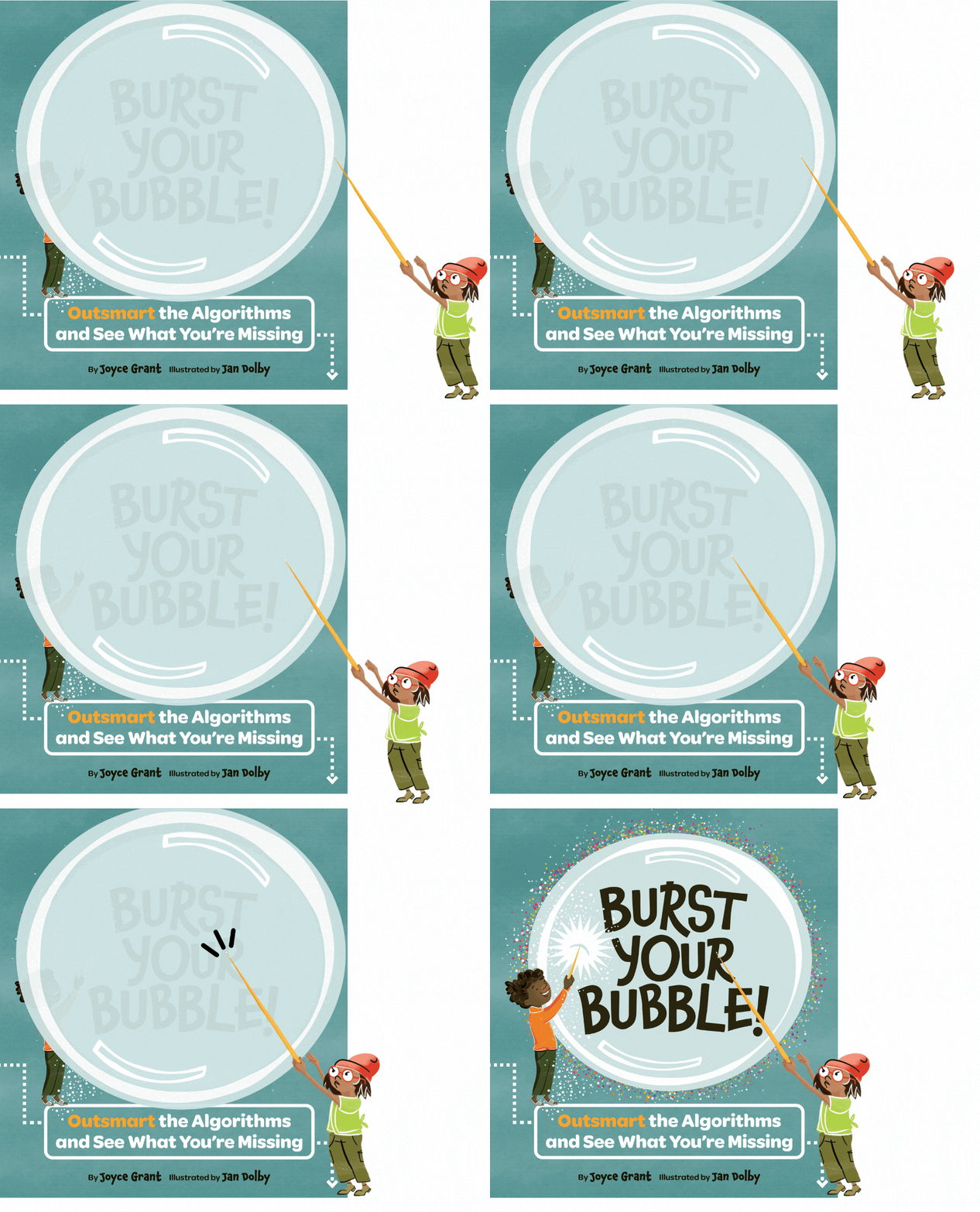
Letters for GabbyMy picture book, Gabby, is coming out this September.

I’m excited! The illustrations are by Jan Dolby and it’s published by Fitzhenry & Whiteside.

I’ll be doing some readings in schools, book stores and at Word On The Street to publicize the book.

I sewed and stuffed some fabric letters to use during the readings. It occurred to me that letters like this are also great for new readers, since they can hold them and make words out of them. Making letters and words tactile for kids is a terrific way to get them reading.

There are lots of ways you can do this without making your own fabric letters (trust me, it’s a lot of work). You can use Scrabble tiles, foam letters from the dollar store, letter dice from a game like Jr. Boggle or Alphabet Scoop, or you can cut out letters or words from magazines.

+Continue Reading

Keeping kids reading all summer

dock sepia; Image: kiwiowner, Wikimedia Commons

Image: kiwiowner, Wikimedia Commons

Studies show that kids who read during the summer jump back into school with a head-start.

Kids who take the summer off (reading, that is), often tend to find September a bit of a struggle.

So for all kinds of reasons, it’s good to keep your kid reading during the summer.

Some of my best memories are of going to the tiny library near our cottage and loading up with a week’s worth of books.

But what if your kid isn’t a super-voracious reader?

Here are some tips:

* See if your library has a summer reading program. Here’s an example. They typically bundle reading incentives into the program – it works! And if you live in Canada, here’s a link to TD’s summer reading club.

* Plan on a quick trip to the library at least once a week. Even if your kid takes out one book, it’s worth it.

* Use books on CD (or MP3) to replace TV time.

* An ebook by the dock? Why not? (Just don’t drop the Kindle in the water…)

* Outdoor time can be reading time. Check out this outdoor literacy suggestion for active kids.

* Alternative reading material counts! Comic books, magazines, ebooks, books on CD… all better than mind-numbing video games.

* Buy your child a book, wrap it up, and hide in in their bed as a bedtime surprise. It’s not a school night, so sure you can stay up and read for a while longer!

* If you’re really serious about breaking some rules for a good cause, include a flashlight with the book you give your child. They’ll figure out pretty quickly that it’s fun to “fool your parents” into thinking you’re sleeping, when you’re really reading in bed with a flashlight. (Of course, you’re one step ahead of them.)


+Continue Reading

Phrazzle Me! is a great game for English learners

Phrazzle Me!If you’re teaching English as a second language (ESL) or if you’re wanting to push your students’ English to a more sophisticated level, here’s a well-thought-out game.

Phrazzle Me! is essentially 200 blocks of wood with words imprinted on them.

The simplest way to play the game is to take seven blocks (each block has four words to choose from) and make a sentence. The next person builds on your sentence, going up and down or across. You get a point for every block you use.

If a phrase doesn’t make sense (“The table barked”) you lose a point.

But Phrazzle Me! (“phrase” + “puzzle”) can go beyond just game-play. If you’re teaching ESL, you can take the game in lots of different directions.

For one thing, the words are colour-coded. For instance, green is “to be” and gerunds “-ing words.” Red is “to have” and past participles.

Now, people who already speak English will probably stop right there. Because in North America, most people don’t know their gerund from their modal–that’s just not the way we normally like to learn languages.

But in most of the rest of the world, teachers and students are very familiar with past participles and auxiliary verbs, and are quite comfortable learning that way.

So for them especially, Phrazzle Me! can be a tremendous teaching tool.

For instance, the teacher can take just the question words, the auxiliary verbs and the subjects and then tell the students to make questions using this format:

Question + auxiliary + subject + verb.

“Where are they flying?” Boom, that’s a great question with every word in the right order.

You can easily change the rules. If you’re working on gerunds, make them worth double the points. If you’re working on past tense, make that key to the game. Let students take more or fewer blocks.

Phrazzle Me! is elegantly designed and sturdy. There’s no board; players set up the game on any flat surface. And it includes a draw-string bag that holds the pieces afterwards.

The game can be played without a moderator, but it works much better when a teacher is involved who decides if phrases are correct or not. It’s designed to provoke discussion and a long-term understanding of English.

We played Phrazzle Me! with our family and found that it can be quite challenging. It just goes to show how complex and difficult the English language is, even for native speakers.

The game is available through phrazzleme.com. There is also a Toronto-based distributor; contact them at dr.montecinos@gmail.com.

At $100 UPDATE: $79.99 a game (which includes shipping) it’s not in the same pricing ballpark as most just-for-fun games. But this is the kind of game an ESL teacher would buy and use throughout her career because it will last forever.

+Continue Reading

Rory’s Story Cubes – simple, elegant literacy fun

Rory Story CubesHere is a simple, elegant, wonderful game that’s great for:

• Story-building
• Fostering imagination
• Putting events in sequence
• Inspiration for writing a story
• Staving off boredom while you’re waiting at a restaurant
• General all-round silliness.

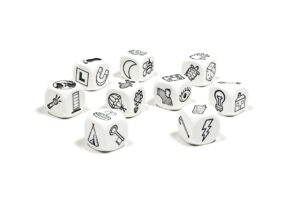
There are nine dice. Each one has six simple pictures. For instance, a happy face, a magic wand, a tree.

You use the nine images to build a story.

For instance:

I was happy when I found a magical tree.

or,

The magician used a tree to make his wand. It was a happiness wand.

or,

I “wand-ered” over to a tree, where I stopped and smiled at my own pun.

The great thing is that there are no wrong answers. And all kinds of possibilities.

Rorys Story Cubes box

Rory's Story Cubes come in a compact, efficient little magnetic box.

You can use as many or as few dice as you want. You can ignore some. You can make the images mean just what you want—even if that wouldn’t be someone else’s interpretation of the picture.

And you can get as silly as you want.

Rory’s Story Cubes are portable and stored in an elegant little magnetic-closure case. We bring them to restaurants and roll them while we’re waiting for the food to come.

Rorys Story Cubes app

The app sells for $1.99.

If you’ve got a few kids in your group—even if they’re very diverse in terms of age or interests—it’s a great way to keep them occupied. And laughing.

There’s a great back-story to this game. Rory originally invented his cube game for companies to foster creativity and teamwork. He has since come up with a number of different versions, including a version with just “action” pictures (verbs), one that’s about voyages, and a smart phone app.

Rory’s story cubes sell for about $15 and they’re available at most toy stores or online at the Rory’s Story Cubes website.

+Continue Reading

World Read-Aloud Day is Wed., March 7

wrad2012badgeIt’s very important to read to your child.

In fact, we consider it one of the top three most important things you can do to help your kid develop a love of reading.

Every day – but especially on Wed., March 7 – take the time to read to your child.

Or even someone else’s. Or a bunch of kids. There’s no downside – and a huge upside.

More information on WRAD here.

+Continue Reading

Help your child understand what he’s reading

Chocolate_chip_cookies; photo by Dan Smith, Wikimedia Commons
Photo by Dan Smith, Wikimedia Commons

I was talking to a mom today about a child who is having some trouble with reading comprehension. In other words, he reads a paragraph and has trouble understanding and summarizing what he’s just read.

He also isn’t reading a lot—possibly he doesn’t enjoy reading because of his difficulties with comprehension.

There are lots of fun activities to help with that and here are a few that I suggested.

1) Take a newspaper and turn to an interesting story. Reading just the headline and looking at the pictures, ask him what he thinks the news story will be about. If he’s having trouble, get him to identify and circle the verbs in the headline and/or the nouns. Use those key words as “hints” as to what the article will be about.

Make sure you pick a headline that’s not too convoluted, and that’s about something interesting for him. If he likes sports, turn to a sports story. (Our sister website, TeachingKidsNews has hundreds of kid-friendly news articles and headlines.)

2) Ask your child to tell you about a video game he likes to play or movie he just saw. Ask him a specific question about it, that encourages him to explain it—for instance, “what scene in the movie made you laugh out loud?” or, “what powers does the main character in the video game have?”

This is part of a process known as “retelling.” Gradually, you can build the activity to the point where he’s retelling the whole movie or video game.

Incidentally, if you’ve got a super active kid, walk around outside with him while having this conversation. Sometimes a kid thinks better when his body is moving. (You’re not his teacher—you don’t have to confine your interactions to a classroom or a desk!)

3) Do a simple recipe together. Bake some chocolate chip cookies (after you’ve simplified the recipe and made it easy to read). While the cookies are in the oven, get him to describe what you did to make the cookies. “First, we melted the butter…” Don’t worry if he misses steps or goes into too much, or too little, detail.

Just have him hit the highlights: We mixed the ingredients together, put it in the oven and baked the cookies. That gives you something to work with; you can fine-tune his retelling skills with questions like, “wasn’t there something before we put them in the oven? Didn’t we have to scoop something?”

Of course, watch for his cues to make sure he isn’t getting frustrated. If he’s done with the whole exercise, then just go and have a cookie together. He’ll get better at it over time.

4) Try a story-building game like GROSS-ABULARY (we just did a review on this terrific game) or Rory’s Story Cubes (we’re about to review it in the next week or so, but if you’re interested now, here’s a link to their website).

5) Write a three-sentence story on a long piece of paper. Make sure it has a beginning, a middle and an end. For instance:

We went to the zoo. We saw some monkeys. The monkey tried to steal my ice cream cone.

This activity can work for older kids as well:

Obi-Wan was driving past a Stormtrooper with C3PO and R2D2. He used a Jedi mind-trick to convince the Stormtrooper, “these are not the droids you’re looking for.” The Stormtrooper let them pass.

Cut the sentences apart and mix them up; have him put the sentences back in the right order. If that’s too easy, take two stories and mix all six sentences up. Have him sort them into individual stories and then put them in the right ordeuKloo scavenger hunt gamer.

6) Reading comprehension can bring instant rewards. Play a game in which reading and understanding what you’ve read brings a quick and fun reward. For instance, give him a paragraph that says something like, “If you look in your shoe by the front door, you will find a clue.” Then, in his shoe hide a second instruction, “Look under the sink for your next instructions.” And of course under the sink there’s another clue. Do as many or as few as you think he’ll enjoy… the last one is accompanied by a treat like a small present or a Hershey’s Kiss.

If you’d rather not create your own scavenger hunt, UKloo is a wonderful scavenger hunt that’s all ready to go. Here’s my review of this excellent game.

Two more things you need to know: First, I’m baking cookies as I write this post, so my whole house smells like literacy. Yum. And second, you know that I don’t get paid by any companies to endorse products, right? I’m just always on the lookout for excellent literacy games and toys. And I find ‘em, oh yes, I find ‘em!

+Continue Reading

DrawaStickman.com

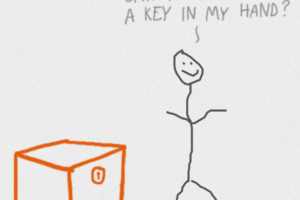
Draw a stickman.comYour kid will love this.

You draw a stick figure, and the website brings it to life.

There is a literacy component, because the site takes the stickman through a plotline. You’re given instructions like, “draw a key in my hand” before he can open a locked box.

Kids have to read and understand the instructions, and then figure out how to fulfill them.

(So like life.)

There’s plenty of action to keep kids interested in the story. I won’t spoil it for you, but think dragon, fire, flood… cartoony, though, not scary.

And throughout it all is a very quirky sense of silliness. For instance, at some point the site itself catches on fire and detritus drops on the dragon’s head. Stuff that kids love.

After you’ve finished the scenario – a couple of times, likely – take a look at the gallery. People have done some pretty incredible “stickmen,” like Steve Jobs, Gandolf, anime and other really inventive characters.

Visit www.drawastickman.com.


+Continue Reading

Silent E

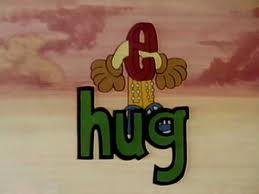
Here is a great video that teaches what Silent E does. (Spoiler alert: For one thing, it makes a hug huge!)

Thanks to thekidshouldseethis.com, who brought this to my attention via a tweet.
Their website is fantastic – it’s a collection of videos that kids just gotta see.

And if you’re in the mood for something slightly more modern…

+Continue Reading