Archive for category: Tips

The right time for reading

I don’t always feel like writing.

Or reading, for that matter.

Since it’s what I do for a living, I have more impetus than most people to actually write. After all, if I do write, I’ll earn some money. If I don’t write, I won’t.

And yet, there are many times when I just don’t feel like writing. Over the years, I’ve come to understand when I’m most creative and when I should just clean the house.

I can only imagine that reading and writing must be even harder for kids, who don’t even have a financial incentive. I’m sure there are many times when they just don’t feel like reading.

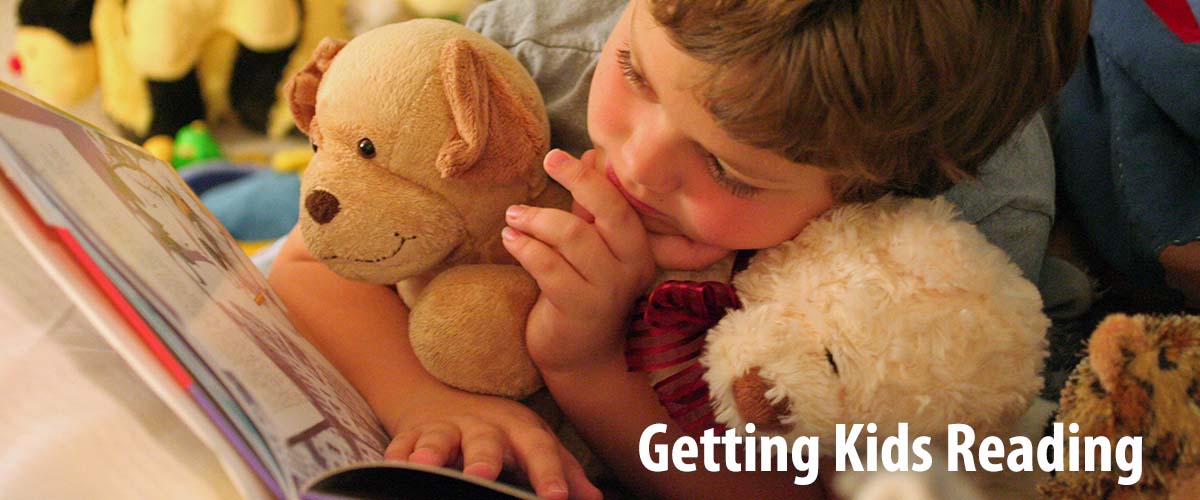
Fortunately, however, they will also have times when reading is just the perfect activity. Maybe it’s an hour before bed, when they’re in their jammies, maybe with a snack on the bedside table. Or during a long car ride. Or after dinner.

If you ask someone to read when they really need to be outside kicking a ball, you’re likely to be facing an uphill battle. But if you schedule time for it when the child most feels like reading, it’s going to be more fun for him.

Not that it’s going to be easy to figure out when his best reading time is. If you’re not sure, why not try the jammies-and-a-snack idea. Or, even better, let your child read past his bedtime. Pretend that you don’t realize it’s after 9:00. Letting a child break the rules by reading is often a great way to invoke reading as a wonderful, guilty pleasure.

+Continue Reading

Literacy activities that appeal to kids

Go with what your child enjoys.

I strongly believe that the best way to get kids reading is to give ‘em what they like. But maybe you think that their interests – their real interests, what they would spend most of their time doing if they were allowed free reign – are not compatible with reading.

Video games
-Show him the Nintendo DS’s PICTOCHAT message function.
-Teach him to type. Let him use Word to type stories and poems.
-The best book ever: Guiness Book of World Records, Gamer’s Edition.
-Magazines for gamers.
-There are lots of websites with educational games. Here’s a good one.

Sports
-Subscribe to Sports Illustrated for Kids.
-Active word games for active kids.

TV
-Subscribe to an appropriate celebrity- or TV-oriented magazine.
-Teach your child how to write (a letter, preferably, rather than an e-mail) to her favourite star. She might even get a letter back.
-Show your older kid how to do “research” on her favourite star using Google.
-Check out the biographies at your library. Maybe there’s one on her favourite star.
-Set limits on “screen-time.” Something like no more than two hours a day, computer/video/TV time. Not as a punishment, but as a new kind of lifestyle. TV-time eats up reading time “like a tiger eats a deer” (my son supplied this helpful analogy). Research backs me up on this (and so does your gut instinct).

The Get-Kids-Reading challenge
What is your child’s interest? E-mail me. I’m certain I can come up with something that will appeal to him or her. C’mon! Throw your best at me. I can take it!

E-mail me or put your child’s activity in a Comment on this site. I’ll come up with some stuff that will appeal to your child, and write a post about it. No names will be used.

+Continue Reading

Judging the age-level of books

What can your child read alone?

It can be difficult to decide what books are just right for your reader – not too hard or too easy. Here’s a great suggestion, from a book/pamphlet produced by the YMCA, called Raising Kids Who Read.

“To decide which books are right for independent reading, notice if your child can read a few pages of a book with 95 per cent accuracy. That is, does he or she miss only one out of every 20 words?

If a young reader falters on one out of every 10 words, take turns reading the book together. You can supply words too difficult for him or her to read. If your child misses more than one in 10, to reduce frustration, make this book one that you read aloud.”

Great advice.

This book was produced in 2004 by the YMCA, 42 Charles St. E., Toronto, Ontario, www.ymca.ca. Writer: Carolyn Munson-Benson, Design: Holmes & Lee, Photography: Stacey Brandford.

Posted by Picasa
+Continue Reading

Reading – more fun than making your bed

I often let my son break the rules by reading.

When I tell him, “it’s time for bed,” he knows that if he grabs a book, it’ll buy him an extra half-hour or so. As long as his teeth are brushed and he’s in his jammies, I’ll extend his bedtime by a couple of chapters.

If he’s been sent up to his room to make his bed, and I discover him reading instead… the bed can wait. And as long as I know his homework will eventually get done, he can delay that by reading as well.

In fact, many rules in our house can be “gotten around” by reading. Of course, the chores have to be done eventually – but in the meantime, my son is discovering that reading is more fun than cleaning up his room.

Reading is more fun than cleaning. I break my own rules as well, staying up late reading a good book. And it’s a whole lot better than late-night TV.

+Continue Reading

How to foster a "reading culture"

Kids who live in a “reading home” will be readers, it’s as simple as that.

What does that mean, and how do you create a reading culture in your home? Here are some key things you can do to create a “reading home”:

*Read to your child every day.

*Have lots of books around. Give your child his own books.

*Let your child read things he’s interested in.

*Go to the library together every two or three weeks.

*Let your child see you reading.

*Ask your child questions about what he’s reading. Be interested in what he’s reading.

*Let your child read to you.

*Offer him a variety of reading options. Novels, comic books, picture books, manuals, recipe books, pages printed from the Internet, graphic novels, magazines, even the side of the cereal box at breakfast time – it’s all reading.

*Set limits on TV and video-game time (“screen time”).

If you can only do one thing, to create a reader, it should be: “read to your child.” Every book and website about reading says the same thing. Read to your child, every day. It’s the most important thing.

+Continue Reading

Use words, not pictures, for labels

This is kind of counter-intuitive, so bear with me.

Let’s say you’re labelling bins in your young child’s playroom. This one is for cars, this one is for balls, this is where the action figures go.

It can be really tempting to draw a car, rather than write the word “CAR” on the label. After all, if the child is too young to read, images would more easily show him where the cars go, right?

While that’s true, it’s the wrong thing to do if you’re trying to help him learn to read. Instead of pictures, print the words “CARS” or “BALLS” or even “ACTION FIGURES” on the bins. Your child will memorize them in no time, and now they’ll know three or four words they didn’t know before.

In fact, you’ll discover that they’re able to pick out the word “ball” or “car” in their first storybooks right away. Kids are sponges. If they’re going to soak up information, give them something worth soaking up.

This happens all the time in companies, too. Often the “stop” button in a manufacturing line will feature an image of a stop sign, rather than the word STOP, for non-English speakers. It’s well-meaning, but it doesn’t help the person who’s learning to read English. Always give the person a bigger challenge than you think they can handle – they’ll rise to it.

+Continue Reading

Singin’ in the Brain

Singing helps children learn to read

When my son was little, our life was a musical. If I could sing something rather than say it, I would. “We’re… puttin’ our shoes now, tying up the laces, goin’ to the park!” (to the tune of Top Hat, White Tie and Tails). “Let’s cross… to the sunny side of the street!”

I also frequently sang another ditty: “A says ah, A says ah. Every letter makes a sound; A says ah!” And I’d get him to join in. “B says… what?” “Buh!” “Right! B says buh. B says buh. Every letter makes a sound. B says buh!”

I’m not a spokesperson for LeapFrog, just a fan. It was their fridge magnet toy (which we didn’t even own – another friend had one) that taught me this catchy tune. It helped my son to learn the sounds the letters make. And that’s a huge step towards reading.

Singing has major teaching benefits. For one thing, you’re happy while you’re singing, and fun and passion always aid understanding. And facts that are sung are much more easily memorized. Singing also creates synapses in the brain, so you’re really doing two things at once – learning and increasing the capacity to learn.

I’m going to ask the LeapFrog people if they can send me a music file so you can hear the fridge magnet song. I don’t know how to post a music file, so I’m a bit scared of that. But I’ll do it for literacy.

+Continue Reading

Avoiding library fines

Libraries don’t have to cost a lot of money.

Here are some tips:
1) Renew your books online. When your deadline is approaching, go online using your library card, and hit “renew” for all your books. It buys you some time.

2) If your books are overdue, renew them online anyway. It stops the bleeding until you can get to the library.

3) Use your child’s card. Library fines are a lot cheaper for children than adults. So take out materials on a child’s card whenever possible.

4) Have a separate basket for library books. Our son’s is at the foot of his bed. Library books automatically go in there, so we’re never scrambling to find them amongst his other books.

5) Post the due-date tape near the front door. The library gives you a printout with your due dates. Hang it where you’ll see it often.

You did get your child a library card, didn’t you? If not, take him to the library and help him get his own card. When he checks out his first book, I guarantee you a parenting moment you’ll never forget.

+Continue Reading

Read to your child every night

Every night? Every night.

Reading to your child could be the single most important thing you do to turn your child into a great reader. And if for some reason you “can’t” read to your child every night, forthwith are my reasons why, in fact, you can.

*He’s too tired.
(Make it a short book. Or a poem. Here’s “Hoppity,” a beautiful, lyrical poem by A. A. Milne that’s fun to read and won’t take up any time.)

*I’m too tired.
(Keep your eye on the prize – you’re creating a reader.)

*It’s boring.
(Get a book you’ll both enjoy. He may want the same book every night, and that’s fine for him but adults get bored with the same thing every night. So get Mary Poppins. There’s something interesting on every page. Plus, you can burst into song – or English accents – if you want.)

*My child won’t.
(Either you haven’t found the right book, or he’s somehow gotten the impression that it’s optional. Stay your ground. Make the book fun by using silly voices. For inspiration, check out how Robert Munsch reads to kids.)

*I can’t read.
(Get a book on CD. And by the way, how are you reading this blog? You can too read!)

*My husband puts him to bed, and he won’t read to her.
(Then read to your child during her bath. Or during snacktime. Or colouring-time.)

Read to your child every night. It’s really, really important.
+Continue Reading

Hallowe’en is for learning

No, not really – it’s for candy and for zombies.

But in the midst of our Hallowe’en party today, I managed to sneak in some learning. We had hidden “eyeballs” (bouncy balls with corneas printed on them) in the backyard. Each child had to find five with their initials on them.

As I was telling them about it, I realized that not every child knew what “initials” were, or what their personal initials were. So I told them about how initials could be just for the first name, or for the first and last names.

And then we went through each person’s name and shouted out their initials. So not only did they have treats, but we taught them a new trick.

This is a picture of the punch we had at the party. It had a hand in it. Fun.

+Continue Reading