Post Tagged with: "five-minute ideas"

Five minutes to bridge the racial achievement gap

Choke by Sian BeilockI’ve been reading this book – Choke. (Because I tend to choke at tennis, that’s why.)

But it’s got some really interesting things to say that will help your kid with test anxiety.

Researchers were studying what happens to African-Americans, for instance, who experience racism throughout their life. These students can have something called “stereotype threat,” which is where students “underperform relative to their potential merely because these students feel discouraged about their ability to succeed.”

They may underperform simply because they are aware of stereotypes about their sex, race or ethnic group that pertain to intelligence.

Researchers wanted to see if they could intervene to subvert the “racial achievement gap” in a school in the Northeastern U.S.

What they did was simple, and brilliant – and it could be done with your child, whether or not he underperforms currently, whether or not he is a minority.

They had half the students respond to a question asking them what their most important value was, and write a brief paragraph explaining why it was important. In the second group – a control group – they had students write about their least important value.

At the end of the school year, they compared the kids. The ones who had – just once in the year, remember – taken the time to consider and think about, and write about, their most important value did better than the other students. The researchers later repeated the experiment, with the same results.

What happened? The students had written about qualities that were important to them. This enhanced their self-worth, even in the face of negative racial stereotypes. It created a “buffer against negative expectations and their consequences,” says the author of Choke, Sean Beilock.

Students who thought about their own good qualities, the things they value, did better at school because they reminded themselves that they could.

It seems that writing is key here. The kids have to take five minutes or so and write down their thoughts about their most important value. And not only did they perform better on that one test, in that one semester, but the research suggests there has been a life-long benefit for many of them.

If your kid says “I can’t do it,” help him remember that in fact, he can.

And by the way, just this afternoon I tried it before I got on the tennis court… 6-2, thank you very much!

+Continue Reading

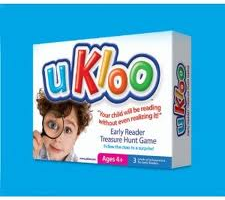
uKloo: the perfect literacy game for early readers

uKloo - fun literacy game for early readersThis could be the perfect literacy game.

So simple and so brilliant.

It has all the elements you could want in a game that encourages reading: it’s fun, it offers an immediate reward for reading, it’s easy for parents to quickly learn and set up and it has lots of “reading helpers” to make sure kids are successful.

uKloo will get your kids reading. It’s as simple as that.

uKloo (“you-clue”) is essentially a treasure-hunt game. You may even have done this yourself with your kids (I’ve recommended the idea – #6) but there’s no work for you to do, other than hiding the clues.

How to play

You hide cards around the house. The child picks the first card and reads, for instance, “look in your mom’s sock drawer.” When he gets there, he’ll find another card: “Look under the mat beside the bathtub.” Under the mat will be another card… and so on, until he gets to the “reward” card.

There are lots of wonderful things about UKLOO:

The “reward” is left up to you. If you believe in offering treats you can make the reward a Hershey’s kiss or some other candy. If your kid loves Lego, maybe he’ll find a Lego character at the end of his journey. Or a book. Or a loonie. Or a card that says, “good for one trip to gramma’s.” You can use whatever you feel will motivate your child, and whatever fits with your family’s values.

Children are set up for success. The game comes with a poster (which you stick up on the fridge or a nearby wall) that helps the child work through the words on the cards. Nouns, verbs and prepositions are listed with a picture to show the child, for instance, what “under” and “behind” mean. If the child can’t figure out a word, he can check the poster for help.

The game has three levels, depending on your child’s reading level. For instance:
Level 1: Look in your shoe.
Level 2: Check in the bathtub.
Level 3: Search behind the pillow on the couch.

As your child becomes a better reader, the game grows with him. Or, siblings can play alongside each other, using different levels.

uKloo was invented by Doreen Dotto, who was having trouble getting her kid to read. That was when he was in grade two. Today, the kid is an English major in university. Just sayin’.

uKloo sells in independent toy stores for $14.99 or on the company’s imperfect website, here. Now, Doreen, how about creating a version for older kids who are reading but still love to play fun reading games and find rewards in their shoes?

Here’s a video (1:18) of the game in action. (Spoiler alert: the kid finds the reward card.)


+Continue Reading

langman: great Internet game that encourages wordpower

Langman

Here at GKR we’re always looking for cool literacy games.

Cool + literacy? Not the easiest combo.

Nevertheless, we’ve found you one. This game is retro, so you know it’s cool. (For future reference: if it looks like something we would have played in the 70s, it’s cool. Just so ya know.)

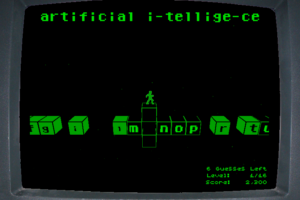
langman is hangman plus… well, something starting with an l. Basically it’s hangman with a platform gaming element.

(Update: Here’s a link to langman.)

Instead of just typing in the letters you want to guess like regular online hangman, you steer a little guy over to the letter using your keypad. If you guess wrong, the letter drops into space and tries to take you with it. As you proceed in the game, it becomes more difficult to reach the letters you want. There’s a lot of hopping and running and leaping. (Maybe the l is for leaping?)

The little man ends up in all sorts of difficulties, like having a big block fall on the letter he wants to select and having to figure out how to move the thing. If you guess wrong too many times you could be left with vast craters which become unjumpable (which is what the R-reset button is for.)

langman was created by Ehren von Lehe , who was nice enough to send us these great screen shots. He wants you to know that you can also customize the words the game uses, adding in some of your own. I think you hit “E” to get into the level editor to do that – but frankly that would require someone more technologically oriented than me… like, say, your kid? (I tried to add Harry Potter and Dr. Seuss but then I got confused and then scared and then I bailed before I saved it properly. I’m sure your kid will do a lot better than me.) * See Update, below.

langman - customize the vocabulary

If you want, you (or your kid) can customize the vocabulary langman uses.

In order to play the game you have to download Unity, which is similar to Flash. At first I balked, but I think Unity is becoming quite popular (von Lehe points out that some big online games like Lego and Star Wars use it). Plus, my Norton program told me it was safe and I always listen to Mr. Norton.

As a literacy tool, it’s not bad. The real draw is that it’s fun and cool enough to keep kids engaged so if they want to play on the computer but you’d like them to do something that challenges their brain, langman may just be that happy medium you’re both looking for.

Thanks to Bart Bonte for pointing us towards langman.

*Update from Ehren von Lehe
To customize the vocabulary:
1. From the main menu, press E.
2. Delete all the text in the “Levels” text box. (This will cause it to just use the default levels.)
3. Enter your custom words and phrases in the Vocabulary text box.
4. Press the “New Game” button.

Viola! You’re now playing the game with your custom vocabulary.
If you want to change something, just press E to get back to the editor.

Thanks, Ehren!

+Continue Reading

One-sentence journal is perfect for kids

Kid Zombie journal from www.cafepress.co.ukI guess the idea of a one-sentence journal isn’t new. But I’d never heard of it before I read about it on Gretchen Rubin’s Happiness Project blog.

She started a one-sentence journal because she wanted to jot down happy memories but knows she could never sustain keeping a normal journal for any length of time.

I thought: What a great idea for kids. Every day, all you have to write is one sentence. (Or draw a picture – or even take a photograph, for that matter).

That’s it – just one sentence. You put the date, and under it your write whatever comes to your mind when you think back on your day. Maybe it was something that made you happy (or sad or excited). Or maybe it was someone you saw or talked to, or something you did that was a little different.

Or maybe something you learned. A life lesson! Imagine being 30 or 40 years old and being able to look back at your top-of-mind thoughts from when you were a kid, all the things you learned? That would be pretty cool.

Kids would get lots out of keeping a one-sentence journal. For one thing, boys especially often don’t get enough opportunities to express their emotions and a one-sentence journal is a great place to do that. And if your kid is like mine maybe his or her fine motor skills aren’t great, so writing is sometimes a chore. But they can write one sentence a day.

Or, they can type their journal on the computer. My son doesn’t get weekday video or computer time, but I’d make this an exception each evening. He’d like that.

Since I read Gretchen Rubin’s post, I’ve been keeping my own one-sentence journal. So far I’ve got some pretty fun stuff — and we’re only on day two (but to be fair, one of the days was April Fool’s Day so that’s automatically going to be a juicy one). I can’t wait until I can look back at a month’s worth of one-sentencing.

I’m also going to start my son on a one-sentence journal. And we won’t wait too long before we go back and read the entries, so he’ll have some supporting gratification right away, for having done it.

And you know, it occurs to me now that not only is one sentence a day a “doable” amount to write–but it’ll also be a reasonable amount for kids to read, as well. A one-sentence journal is a great way to get your kid writing – and reading.

+Continue Reading

Children’s book apps for your cell phone

Children's book apps; image: 2.bp.blogspot.comChildren’s book publishers are creating cell phone apps for books like The Velveteen Rabbit and The Cat in the Hat.

Kids can read the book on their parent’s phone and enjoy some interactive features. For instance, they can touch a word they don’t know and hear it or touch the picture of a bird to see the word “bird.”

As the app reads the book out loud, each word is highlighted so the child can follow along. Some books are read by the author and others are ready by celebrities including Meryl Streep and Robin Williams.

Books apps for children aren’t really new. Readers of this blog know that I have long loved the LeapFrog book readers, and these apps are essentially the same thing—albeit a souped-up version. And without the physical book. So, erm, that’s quite different, then. But, same idea.

Some book apps also pronounce the words in other languages so kids can hear a second language while they’re enjoying the book.

Critics of the apps say that with a book the child is in the driver’s seat but with an app the book content is leading the learning. Not sure if I agree with that, especially harkening back to the LeapFrog reader–of which my child was definitely in control, and not the other way around. Perhaps a more pointed criticism is the fact that apps aren’t books. Beautiful, tactile, sometimes dog-eared, sometimes unwieldy, delicious books. But I digress.

The information in this article was taken from an article on npr.org. The article points out that, while book apps won’t replace children’s books… at least they’re better for your kid than Angry Bird. Now that’s a good point.

Ruckus Media produces many of the apps; you can buy them for about $3.99 per app.
There are a bunch listed on Ruckus’s website.

+Continue Reading

Brilliant animal video by the BBC

This has nothing to do with literacy. Well, unless there’s something called “animal literacy” (which there’s not).

But some things just have to be shared. Stick with it past the Michael Jackson bit – it gets really good.

+Continue Reading

Brain game: Connections

Will SmithHere’s a fun game we were playing at the dinner table recently. It’s called “Connections,” and it’s great to help with creativity and get the blood flowing to the ol’ brain cells – not just for your kids but for you, too.

You start. You name two objects that seemingly have no connection to each other. Your child has to somehow connect the two objects in a logical way.

Here’s an example:

You: An electric oven and a tree.

Your child: The electric oven is based on the wood-burning stove. Wood comes from trees.

Then, it’s your child’s turn:

Your child: Snow and Florida.

You: That’s a hard one. Um, there’s no snow in Florida?

Your childAaaaaaang! (Buzzer sound). No way - try again!

You: In Florida, they have a hockey team called the Panthers. If one of the players stops really hard on the ice, his skate blades will create some… snow!

Your child (giggling hysterically at your ineptitude at this game): Oh man, mom–you were really reaching on that one! OK, I’ll accept that answer even though it’s awful. Your turn.

And on it goes.

The great thing is that there are no rules. Together you decide what’s acceptable and what isn’t.

And the other great thing is that often it’s harder to be the person coming up with the two objects than it is to be the person connecting them.

And the other great thing is that it’s all using your brain and having a good time doing it.

And then all of you can go and rent that Will Smith movie “Six Degrees of Separation.” No, wait – don’t do that. Highly inappropriate for kids. But you can watch it again when your kid’s asleep. Great flick. And, an excuse to have Will Smith’s picture on this post. Sigh.

+Continue Reading

No time for literacy activities? Harness the power of two

Literacy game - "crumple"

What kid can resist a game of "Crumple"? Crumpled up pages reveal silly riddles.

If you aren’t able to find time to read to your child or offer him literacy activities—use the power of two—you and another parent.

You know that kids who are read to every day are more likely to develop a love of reading. But that’s 15 minutes that tends to slip right by and before you know it, your child is asleep and you haven’t managed to read together like you’d hoped.

Here’s what you can do—team up with another parent and schedule time to do some literacy activities with your child and their child.

If you’ve got a toddler or an infant, chances are you regularly get together for coffee with another parent. Next time, plan to build a five-minute literacy component into something you’d be doing anyway. Use the first five minutes you’re in that café to prop your friend’s child on your lap and read her a couple of books. At the same time, she’ll be doing the same for your child. (Or each read to your own children—whatever works.)

Then, the rest of the coffee break can be about other things. But the point is, you’ve read with your child and she has read with hers. And better still, the kids saw each other reading, which will reinforce that this is a nice thing to do.

If your child is older, use the power of two to motivate you and remind you to do some literacy activities. Schedule regular weekly playdates—one at your house and the next week, one at their house. Talk to the other parent and brainstorm a simple literacy game, craft, activity that the kids can do—if only for 15 minutes—right at the beginning of the playdate. When they come to your house, the kids will find a craft or a game set out on a table. Let them find it themselves and it’s pretty likely they’ll start doing it. (I don’t know many kids who can resist stuff set out on a table, especially if the parent is just leaving them to it.)

Here are some suggestions:

* Put some crayons and blank paper on the table. Pre-make a paper airplane with a message inside it, “Hi Scott!” and explain that these are “message planes” that fly back and forth across the room with messages to the other person.

* Put a sentence on the table that is all mixed up. When they piece the words together, they’ll discover a secret message: “Your playdate snack is under your bed!”

* Play “Crumple.” Put a bunch of crumpled-up pieces of paper on the table. As they unravel each one, they’ll find a joke—on the back of the paper is the answer. (“What kind of hair do oceans have? Wavy!”) Here are lots more silly kids’ jokes.

It takes a bit of planning, but with the power of two, you’ll have a day off the next week as the other parent puts together a fun activity for the kids at her house.

For other fun literacy crafts or activities, search this blog or click on the tags for five-minute ideas or 15-minute ideas. There’s lots of stuff you can do that is fun, quick and easy and costs nothing to put together.

+Continue Reading

Valentine’s Day literacy activities

Book heart Image: http://www.flickr.com/photos/smichael/Use Valentine’s Day as an excuse to do some fun literacy activities. (From ABC Canada.)

1. Think of words that rhyme and write a poem for a loved one.

 2. Create personalized Valentine’s Day cards and write each other loving messages. Cut out words and letters from magazines to make them extra unique.

 3. Bake Valentine’s Day cupcakes and use candy heart notes or icing to write a sweet message.

 4. Play a “Valentine’s Day edition” game of Scrabble and score double points when you spell a word about love.

 5. Show your kids you love them by reading a love-themed book together, like Clifford’s Valentine’s Day.

6. Research the meaning behind Valentine’s Day.

Holidays provide a great opportunity to incorporate creativity and imagination with fun literacy-related activities to be enjoyed individually or as a family. Benefit from literacy by spending 15 minutes a day reading, writing, playing a game or following a recipe.
+Continue Reading

Remarkable research on kids’ ability to self-instruct

Sugata Mitra's hole-in-the-wall experiment; some children using a computer embedded into a wall.

Image: D.Salhundi, Karnatak, India

Here’s why we say you should “scatter books around the house.”

I want you to watch this exciting speech by Sugata Mitra on TED.com that illustrates the extent to which kids can teach themselves.

Through his “Hole in the Wall” project he conducted a series of experiments in 1999. He went to a slum in New Delhi, India and secured computers, hooked up to the Internet, into a wall so they could be used. And then he left.

The kids there had never used a computer before. And, the computer was completely in English—a language the kids didn’t speak or understand.

Within eight hours, an eight-year-old boy was not only surfing the Internet, but he was teaching a six-year-old friend how to browse.

The kids taught themselves how to use the PC, and the Internet—in English—and they began teaching each other.

He conducted the many more experiments which supported his theory that when they’re left alone, with the right resources, children are able to self-instruct to an incredible degree.

So how does this apply to literacy? It’s simple: Scatter books around your house. Put a book on his bed. Put a book in the bathroom. Leave a book poking out from under his dresser. Leave a book on the kitchen table.

If you leave a kid alone with a good book, he will pick up the book and start flipping through it. Soon, he will become interested in it. He will read.

Here is the speech (it gets really interesting at about 7:33).

+Continue Reading